 US | en


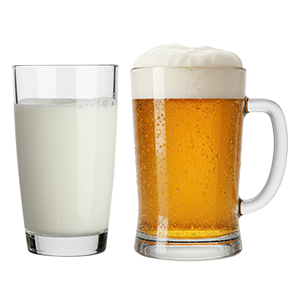
At a glance, dairy and brewing may seem like vastly different industries, but step inside a processing facility and the similarities become clear. Both rely on hygienic equipment designed to protect product quality and promote food safety. The components used in each market are focused on the same core principles of cleanability, durability, and reliability.
Hygienic Design
Both dairy processing and brewing equipment are designed with food safety in mind, ensuring product integrity and cleanability. This is done with 3A-certified equipment, including valves, fittings, and filtration systems specifically designed to meet food and beverage processing needs.
Process Differences
While dairy and brewery operations share many similarities, they differ in their process flow and operating conditions.
Continuous vs. Batch Production
Most dairy processing facilities operate on a continuous production model. Milk is received, pasteurized, separated, standardized, and packaged in steady, high-volume flow. Equipment must support uninterrupted throughput with minimal downtime.
Breweries, on the other hand, typically operate in batches. From mash tun to fermentation and conditioning, the product moves through defined stages with pauses between them. This batch structure often requires more frequent changeovers, flexible routing, and systems that can handle varying flow rates throughout the brewing cycle.
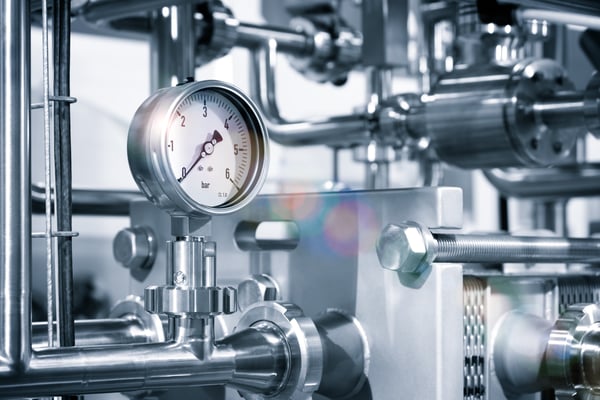 Photo courtesy of iStock, Matveev_Aleksandr
Temperature, Pressure, and Dwell Time Variations
Temperature and pressure profiles also differ significantly between the two industries.
In dairy processing, rapid temperature changes are common, particularly during pasteurization and cooling cycles. Equipment must withstand thermal shock and maintain seal integrity through repeated heating and cooling. Pressure stability is critical to maintaining product quality and preventing contamination in continuous systems.
Breweries experience different stresses. Fermentation introduces pressure buildup, carbonation requires controlled pressurization, and product may remain in tanks for extended dwell times. Components must tolerate internal pressure fluctuations and prolonged contact with the product.
Impact on Flow Control and Connection Methods
The continuous operation of dairy systems means flow control must be precise and dependable. Mix-proof valves and reliable shutoff mechanisms are often used to prevent cross-contamination between raw pasteurized product streams. Hygienic fittings must support frequent clean in place (CIP) cycles without loosening, leaking, or degrading.
In breweries, flow control often supports routing flexibility to direct wort, beer, or cleaning solution between tanks at different stages. Sanitary clamps are widely used to allow disassembly for cleaning or system reconfiguration. Valves must also accommodate varying flow rates, carbonation pressures, and in some cases particulate matter such as yeast.
In both industries, hygienic clamps, valves, and fittings are the foundation, but the processes that drive them shape how they are selected and applied.
Cleaning and Sanitation Requirements
Cleaning is a core system requirement for dairy and brewery processes, with both industries utilizing CIP equipment. However, dairy systems are typically cleaned on strict, frequent schedules, often daily or multiple times a day, while breweries clean between batches and at defined process stages. While frequency may vary, sanitation remains critical to prevent flavor contamination, microbial growth, and quality inconsistencies.
Chemical Exposure and Material Compatibility
Dairy processing facilities commonly use strong alkaline cleaners to remove fats and proteins, followed by acid rinses to address mineral buildup. These cycles, combined with elevated temperatures, can place significant stress on elastomers and seals.
Breweries must remove yeast, sugars, and hop residues while managing biofilm risks. Cleaning agents may include caustics, acids, and sanitizers, along with exposure to alcohol and organic acids during production.
In both industries, material compatibility is essential for long-term performance.
Materials
Stainless steel is the standard material used for dairy and brewery applications, but the specific grade matters.
304 stainless steel is widely used for general hygienic applications. It offers good corrosion resistance and durability at a cost-effective price point, making it suitable for many non-aggressive product contact areas, particularly in brewery systems.
316L stainless steel contains added molybdenum for improved corrosion resistance. In dairy processing, 316L is often preferred for product-contact surfaces. Breweries may also specify 316L in areas exposed to aggressive chemicals or extended fermentation.
Ultimately, the choice depends on chemical exposure, cleaning intensity, and long-term corrosion resistance requirements—not just the industry itself.
Dixon Dairy and Brewery Products
Dixon supplies a variety of products for dairy processing and breweries. Some of the products used in both industries are outlined below.
BC/BP-Series Sanitary Centrifugal Pump
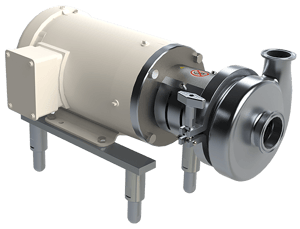 Application
- Low-pressure, high-capacity pumping of low-viscosity liquids
Features
- Casing is stamped, not cast, for lighter weight and less porosity
- Safer cage-less guard design
- BC-series features impeller retainer
- BP-series features threaded impeller nut
Specifications
- Nominal capacity up to 1200 GPM
- Temperature range: 32°F (0°C) to 212°F (100°C)
- Nominal speed: 3500 RPM (60 Hz)
- F-seal - cascade flush option for D or DG seal
- 100% CIP-able
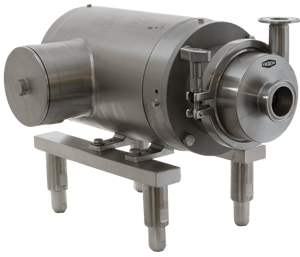 Application
- General purpose transfer of liquid within dairy, winery, and brewery processing lines
Features
- Uses standard 4” tube clamp for easy removal and adjustment of the casing
- Efficient seal path promotes seal cooling and provides less restrictions to adequately clean the seal
- Sealed impeller provides optimal hygienic performance while the split shaft compression collar improves shaft concentricity, reduces vibration, and improves seal life
- Drop-in replacement for other C-100 series pumps
Specifications
- Operating temperature: 32°F (0°C) to 212°F (100°C)
- Viscosity range: 1-500 cP
- Nominal capacity: up to 75 GPM
- Nominal speed: up to 3500 RPM (60 Hz)
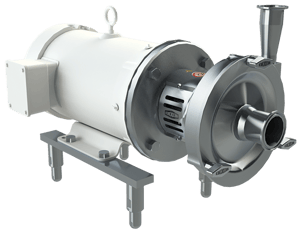
ExD-Series Sanitary Centrifugal Pump
 Application
- Transfer of high-temperature or viscous products
Features
- Externally balanced seal with clamped in seat
- Unique adapter slots make pump discharge easily adjustable from 90° to 180° without casing or front cover disassembly
- Wet end mounts to a standard NEMA C-face frame motor
Specifications
- Operating temperature: 32°F (0°C) to 212°F (100°C)
- Viscosity range: 1-500 cP
- Nominal capacity: up to 500 GPM
- Nominal speed: up to 3500 RPM (60 Hz)
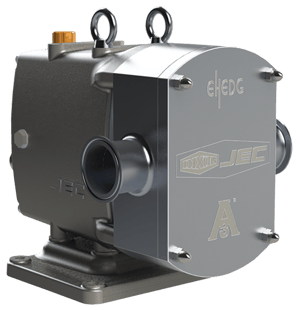
RZL-Series Positive Displacement Pump
 Application
- Gentle handling of milk, yogurt, cream, beer, and other shear-sensitive products
Features
- Bi-wing rotors to maintain efficiency even with low-viscosity products
- 25 Ra finish meeting EHEDG and 3A specifications
- 100% CIP-able
- Stainless steel shims between the gearbox and casing
Specifications
- Front-loading seal options:
- Single (standard) and double mechanical seals, TC vs TC (standard)
- Triple lip seal
- Flush options available on all seal types
Application
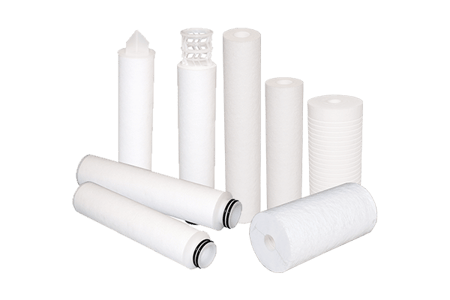
- Removing particulates from milk, whey, beer, and other process fluids to ensure product quality and consistency
Features
- FDA Title 21 compliant
- Cartridge options: melt blown, high efficiency pleated, carbon block, and polyether sulfone
Specifications
- Micron ratings:
- DF-MB-Series: 1, 5, 10, 20, 25, 30, 75, and 100
- DF-PHE-Series: 0.2, 0.45, 1, 3, 5, 10, 25, and 50
- DF-CB-Series: 1, 3, 5, and 10
- DF-PES-Series: 0.1, 0.22, 0.45, 0.6, 0.8, 1.2, and 5
Read Filters and the Purification Process to learn more about Dixon’s sanitary filters.
 Application
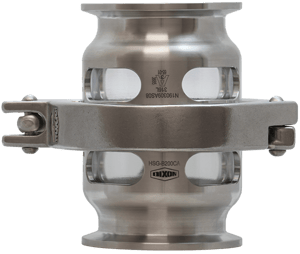
- Visual inspection of milk, cream, beer, or other liquids to monitor flow and product clarity
Features
- 3A certified for CIP
- Easy to assemble and disassemble
- Patented single clamp construction
Specifications
- Product contact metal components: 316 stainless steel
- Non-product contact metal components: CF8
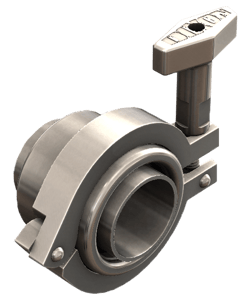 Application
- Provides flexible rotating connection in fluid transfer systems to help prevent hose kinking and support smooth product flow
Features
- 3A certified for COP
- Easy assembly/disassembly
- Multiple body styles for greater process flexibility
Specifications
- Maximum pressure at 70°F (21°C)
- 1” and 1-1/2”: 500 PSI
- 2”: 450 PSI
- 2-1/2”: 400 PSI
- 3”: 350 PSI
- 4”: 300 PSI
- Maximum pressure at 200°F (93°C)
- 1” and 1-1/2”: 300 PSI
- 2”: 250 PSI
- 2-1/2”: 200 PSI
- 3”: 175 PSI
- 4”: 150 PSI
Summary
As a supplier of food and beverage processing components, Dixon is committed to providing The Right Connection® for dairy and brewery operations. For more information, visit dixonvalve.com or call 877.963.4966.