 US | en


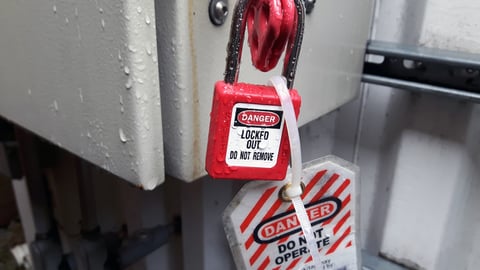
Controlling hazardous energy is an important aspect of servicing and maintaining machines and equipment. One proactive safety measure required by OSHA is lockout/tagout.
What is Lockout/Tagout?
Lockout/tagout (LOTO) is used to describe two separate actions that disable machinery or equipment (lockout) and use warning tags to indicate equipment is de-energized (tagout).
According to OSHA standard 29 CFR 1910.147, a lockout device is “a device that utilizes a positive means such as a lock, either key or combination type, to hold an energy isolating device in a safe position and prevent the energizing of a machine or equipment.”
A tagout device is “a prominent warning device, such as a tag and a means of attachment, which can be securely fastened to an energy isolating device in accordance with an established procedure, to indicate that the energy isolating device and the equipment being controlled may not be operated until the tagout device is removed.”
LOTO is commonly used in several industries, including:
- Manufacturing
- Energy and Utilities
- Oil and Gas
- Construction
- Food and Beverage Processing
- Automotive and Aerospace
- Mining
- Pulp and Paper
- Water and Wastewater Treatment
Why is Lockout/Tagout Important?
Hazardous energy refers to any type of energy that can harm a worker if it’s not properly controlled during the servicing or maintenance of machines and equipment. When machines are turned off, they can still contain energy that could suddenly release, causing serious injuries or fatalities.
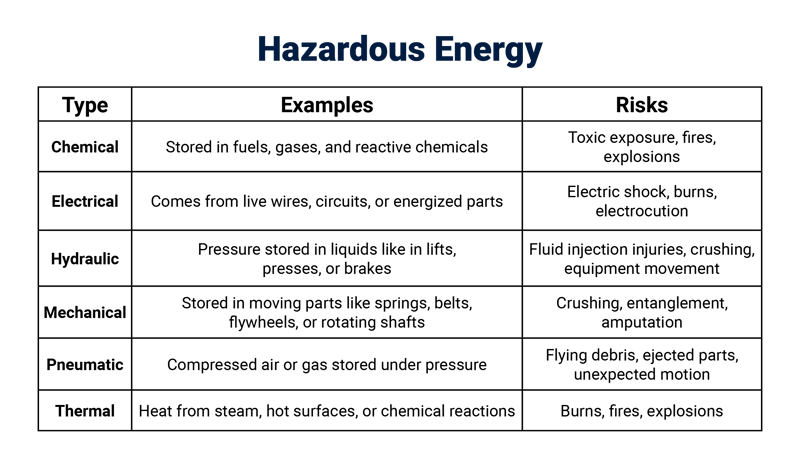
Uncontrolled hazardous energy can result in damage to equipment, injuries, and even fatalities. Due to the serious nature, OSHA has LOTO regulations that must be followed to prevent fines and legal liability. Overall, the most important reason to follow LOTO procedures is to protect workers, but the practice also reduces downtime and promotes a culture of safety in the workplace.
What are the Key Elements of a Lockout/Tagout Program?
Employers are required to establish and enforce a structured energy control program to protect employees. The LOTO program should include specific written procedures, training, and inspections.
Written Procedures
Every piece of equipment with more than one energy source must have a documented, step-by-step procedure outlining:
- The energy source involved (electrical, hydraulic, etc.)
- How to safely shut down, isolate, and secure the equipment
- How to verify that all energy has been controlled before work begins
These procedures must be easily accessible to all employees.
Employee Training
Employees must receive adequate training appropriate for their role. The training includes:
- Authorized employees understand and perform the LOTO procedures
- Affected employees who work in the area should understand what LOTO means and why it is important
- Other employees, even if they are not directly involved on a regular basis, must recognize LOTO devices and know not to tamper with them
Training should be documented and refreshed periodically to maintain compliance and awareness.
Lockout/Tagout Devices
Employers must provide LOTO devices, such as Dixon’s Wilkerson Lockout Valve and Safety Vented Ball Valve, and ensure employees are confident in following the proper procedures for use.
Periodic Inspection and Program Audits
Annual inspections of both procedures and employee performance should be conducted to confirm:
- Steps are followed correctly
- Equipment list and procedures are current
- Employees understand their role and responsibilities

Lockout/tagout sign attached to machine valve in oil and gas processing plant; Photo courtesy of iStock, Thank you for your assistant
Lockout/Tagout Process
There are seven core steps for LOTO typically required by OSHA and industry best practices.
- Before any work begins, the authorized employee must identify every energy source connected to the machine, review the control procedure, and notify all affected employees that LOTO will be performed.
- Safely turn off the machine or equipment following manufacturer or site-specific shutdown procedures.
- Physically isolate the machine from each energy source by disconnecting electrical circuits, closing valves or blocking fluid lines, and securing mechanical linkages. Each isolation point must be clearly identified and accessible.
- Attach lockout devices to each energy-isolating device. If locking isn’t possible, apply a tagout device that clearly warns not to operate the equipment. Each device must include the name of the person who applied it, and only that person can remove it later when the maintenance is complete.
- After isolation, release or block any stored residual energy that could cause movement or harm. Examples include discharging capacitors, bleeding pressure from lines, and lowering elevated parts. This step ensures that even hidden energy sources are neutralized.
- Before maintenance or service begins, verify that the machine is completely de-energized. Never assume, always test before you touch.
- Once maintenance or servicing is complete, confirm all guards and safety devices are reinstalled, notify affected employees that locks/tags are being removed, and re-energize and test the equipment for normal operation.
Lockout/Tagout Best Practices
The importance of LOTO cannot be overstated. Avoiding common mistakes is imperative and can be accomplished with a few industry best practices.
As much as possible, it is recommended to standardize LOTO devices across a facility for consistency and ease of use. Clear labeling and signage should also be provided to ensure devices are used properly and all employees are aware of what the presence of LOTO devices means.
Encouraging a safety-first culture is important for any industry. Dixon offers On-Site Safety Training to help identify potential hazards and recommend lockout/tagout devices to integrate seamlessly into existing systems.
FAQs: Lockout/Tagout
- What is the Difference Between Lockout and Tagout?
Lockout is the physical action of placing a lock on an energy-isolating device to prevent operation, while tagout means attaching a tag to warn others not to use it. - Why is Lockout/Tagout Important?
LOTO prevents serious injuries and fatalities caused by the unexpected startup of machinery or the release of stored energy. LOTO is a key OSHA requirement designed to protect workers from electrical, mechanical, hydraulic, pneumatic, and other hazardous energy sources. - What are the Steps for Lockout/Tagout?
- Prepare for shutdown
- Shut down equipment
- Isolate energy sources
- Apply LOTO devices
- Release stored energy
- Verify zero energy state
- Remove locks/tags and restart - Who can Perform Lockout/Tagout Procedures?
Only authorized employees who have received proper training can complete LOTO procedures. Other employees must be aware of the controls and understand not to tamper with locks or tags. - How Often Should Lockout/Tagout Training be Conducted?
OSHA requires employers to provide LOTO training when employees are first assigned duties and retrain them as needed, such as when procedures change or inspections reveal gaps. Annual program audits also help ensure ongoing compliance and safety.
Summary
Lockout/tagout is one of the most important safety procedures in any workplace where machines and equipment are serviced and maintained. By isolating energy sources and verifying that equipment is completely de-energized, LOTO prevents accidents caused by the unexpected release of hazardous energy. A strong LOTO program with clear, written procedures, proper training, reliable lockout devices, and consistent inspections keeps workers safe and ensures OSHA compliance.
For more information about Dixon products for LOTO, visit dixonvalve.com or call 877.963.4966.